

Brake fluid is not something most people think about until something starts going wrong. Over time, it can become contaminated, depleted, or burnt out, which prevents proper brake function. That’s why it’s vital to keep the brake fluid clean and free of any contaminants to ensure proper brake function. In this article, we’re going over what brake fluid is, its different variations, purpose, and proper service intervals.
What is Brake Fluid
Brake fluid is an essential part of a car’s braking system and is necessary for the brakes to function properly. It functions in a sealed-off, high-pressure, high-temperature environment. Without it, there wouldn’t be enough pressure to get your vehicle to a safe and complete stop.
Different Types of Brake Fluid
It is crucial to regularly check the condition of brake fluid and change it as needed to ensure the braking system operates properly. There are different types of brake fluid, including DOT 3, DOT 4, and DOT 5, each with different properties and uses.
DOT 3
DOT 3 is the most common brake fluid used in vehicles. Fresh DOT 3 has a boiling point of 401 degrees Fahrenheit, and when fully degraded, it drops as low as 284 degrees Fahrenheit. This makes your brake fluid much more likely to boil. DOT 3 is highly corrosive; careful action should be taken. It will remove paint and should be cleaned up immediately using soap and water or a degreaser.
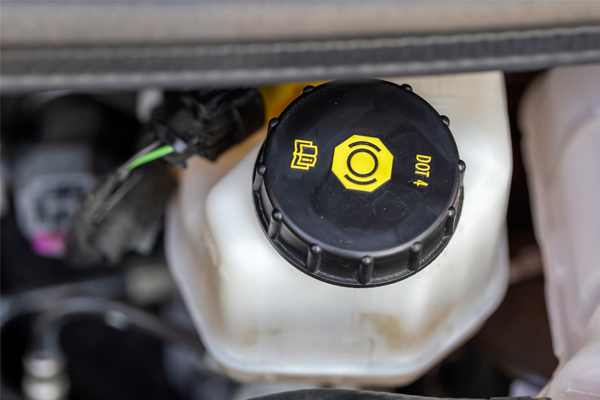
DOT 4
DOT 4 has been primarily used for European vehicles, but is becoming more widely used by vehicle manufacturers. It has a higher boiling point than DOT 3, starting at 446 degrees Fahrenheit, and drops to around 311 degrees Fahrenheit when fully degraded. This higher boiling point makes it better suited for vehicles that generate more brake heat.
DOT 5
DOT 5 is a silicone-based brake fluid and has a very high boiling point of 500 degrees Fahrenheit. Usually, it has a purple color to differentiate from the amber color of DOT 3 and 4. DOT 5 is not recommended for ABS systems; it does not absorb water as well as glycol-based brake fluids.
Signs You Should Change Your Brake Fluid
Illuminated ABS Light
The anti-lock braking system (ABS) light alerts the driver to a problem within the braking system that needs to be checked. Because the ABS uses the same hydraulic fluid as your standard braking system, a drop in fluid level – often caused by a leak or worn brake pads- can trigger the ABS to disable itself and turn on the warning light. If you’re seeing an ABS light, low fluid is a primary culprit, but it could also signal a deeper issue.
Brake Pads Not Working Properly
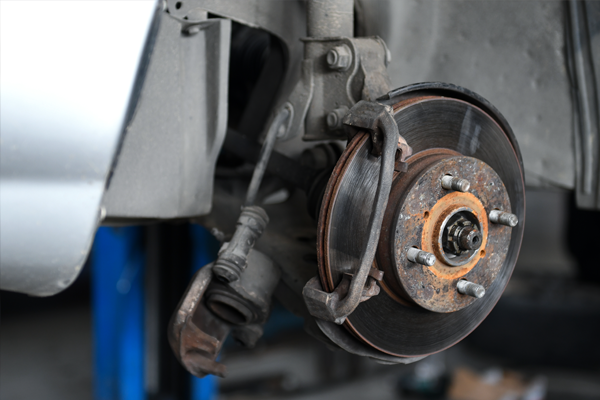
Brake pads are a crucial component of your vehicle’s braking system, responsible for bringing your car to a stop. However, they depend on the hydraulic pressure generated by brake fluid to function effectively. When brake fluid levels are low, or the fluid becomes contaminated, the force on the brake pads is reduced. This can lead to delayed stopping response, uneven braking, or the pads failing to engage fully with the brake rotors. In some cases, you might hear grinding, squealing, or scraping noises, which often indicate that the pads are struggling to make proper contact due to insufficient hydraulic pressure. Continually driving with low or contaminated brake fluid can cause premature wear on both the pads and rotors, potentially leading to more expensive repairs.
Strange Noises When Braking
When brake fluid is low or has degraded over time, it may not transmit hydraulic force efficiently, causing the brake components to operate abnormally. This can result in high-pitched screeching, squealing, or grinding noises, especially when applying the brakes. Such sounds typically mean that the brake pads are not pressing firmly or evenly against the rotors, which can also increase the risk of heat buildup and further damage. Addressing fluid issues quickly can help prevent these noises and ensure your braking system works quietly and reliably.
Problems With The Brake Pedal
If your car doesn’t have the right amount of brake fluid, you’ll notice your brake pedal is harder to press down, or it has a “soft” feel when you press it. This happens because air or moisture in the brake lines reduces the system’s ability to build pressure.
Brake Fluid Discoloration
Brake fluid discoloration is a clear measurement of your braking system’s health. Fresh fluid is typically clear to light yellow, but over time, it darkens as it naturally absorbs moisture and collects contaminants. If you notice that your brake fluid has darkened its highly recommended to get a brake fluid flush.
How Often Should You Change Brake Fluid?
It’s always a good idea to have your brakes and brake fluid checked every time you bring your car in for an oil change. It’s recommended to flush your fluid in accordance with the OEM maintenance schedule and use the factory-recommended brake fluid, or a technician can thoroughly inspect the overall health of your brake system and make recommendations based on that.
Dependable Brake Services in Puyallup
Ensuring your braking system is functioning properly at all times is essential for the safety of you and any passengers. If you’re in need of brake services on your vehicle, schedule an appointment with the expert technicians at 15th Street Automotive in Puyallup, Washington! Our team has extensive training and experience providing service on the brake systems of all kinds of makes and models. Give us a call today or schedule online!