

Shocks and struts are separate components in a vehicle’s suspension system. Both play an integral role in the function of your car’s suspension, but it’s important to understand the difference between the two. In this article, we will explore shocks and struts, compare the key differences, and go over exactly what each component does.
How Does The Suspension System Work?
A vehicle’s suspension system ensures that all four tires are in contact with the road at all times. Cornering, braking, accelerating, and encountering road hazards all affect how the weight of your car is distributed. Its the suspension system’s job to keep you in control and provide a smooth and comfortable ride.
What are Struts?
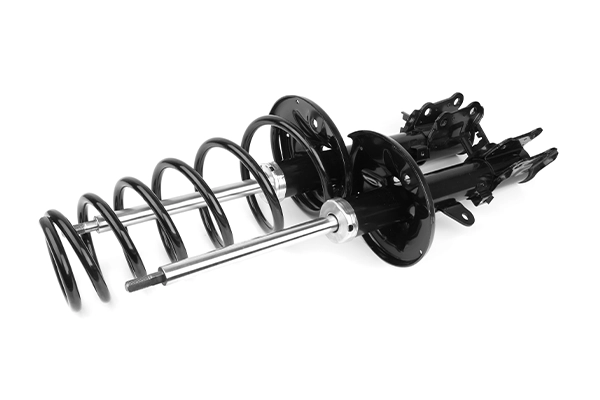
Struts serve a similar purpose as shocks, but have key differences between the two. A strut is a structural part of the suspension system, combining a shock absorber with a coil spring into a single unit. Since struts are structural, they play a much larger role in alignment and handling. When it comes to replacing struts, your vehicle typically requires a wheel alignment, which is not typically necessary when replacing shocks.
What are Shocks?
Shocks are hydraulic components designed to control the movement of your car’s springs. When you drive over a bump, the springs compress to absorb the impact of the road. Without shocks, your car would bounce unpredictably, creating unsafe driving conditions.
Shocks don’t necessarily support the weight of the vehicle. Instead, they work to dampen the impact and manage boucnienes, improving ride comfort and tire contact with the road. Good shocks help your tires maintain consistent traction, which directly affects steering, braking, and overall stability.
What’s The Difference?
When it comes to a vehicle’s suspension system, shocks and struts are generally mentioned together because they play a similar role in maintaining a smooth ride and ensuring safe handling. However, there are key differences between shocks and struts.
Struts incorporate shock absorbers in their assembly, while shocks are a standalone component. Strut assemblies can perform the functions of both shocks and springs, providing structural support.
Function
Shocks are responsible for controlling bounce and regulating suspension movement by absorbing the energy of the vehicle’s springs. This ensures a smoother ride and better tire contact with the road. Struts, while also providing stability, serve additional functions; they support a portion of the vehicle’s weight, maintain the alignment of suspension components, and are integral to the vehicle’s steering and handling.
Structure
Shocks are standalone components, designed solely to dampen suspension movement. They do not contribute to the structural integrity of the suspension system and are typically mounted between the vehicle’s frame and the suspension. In contrast, struts integrate several suspension parts—including the coil spring, shock absorber, and other structural elements. Struts not only dampen movement but also provide structural support, help bear the vehicle’s weight, and play a crucial role in alignment and overall handling.
Cost of Replacement
Struts are generally more expensive to replace due to their complexity, and you’ll most likely need an alignment afterwards. Shock replacement tends to be quicker and more affordable.
Vehicle Design
The design of a vehicle’s suspension system and its components depends on the manufacturing and model. Some models may exclusively use one or the other, while other models integrate both into the suspension system on different axles.
Symptoms of Bad Shocks and Struts
Despite being very different components, shocks and struts share common symptoms when they start to go bad/fail. The signs can appear in various ways. Most of the time, you will be able to notice a problem while driving.
Bouncy Ride
When shocks or the shock absorber components within a strut assembly begin to deteriorate, you may notice a change in how your vehicle rides. When shock absorbers stop working correctly, they are not able to control the up and down movement of the suspension. As a result, your vehicle may start to feel more bouncy. You may also feel your vehicle “squat” more when you brake or press the gas pedal.
Tire Wear
Uneven tire wear can be a symptom of a failing shock or strut, which often coincides with a bouncy ride.
Leaking Fluid
A clear sign of a failed shock absorber is leaking hydraulic fluid around the shock or strut. If the component has sustained damage or worn out, the hydraulic fluid inside the shock tube can start to visibly leak around the shock or strut.
Clunking Noises
A worn shock or strut can also produce uneasy noises when you go over bumps or potholes. You may also hear a loud thud or metallic clicks. These sounds can originate from the shock absorber bottoming out, a broken spring on the strut assembly, or even a failed mounting hardware
Shocks and Struts Service In Puyallup
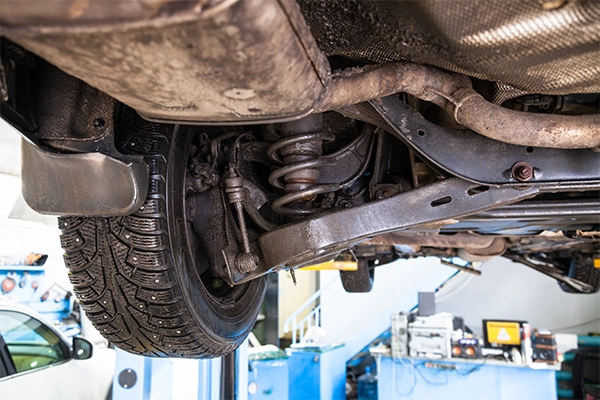
If you’re experiencing issues with your shocks or struts, trust the experts at 15th Street Automotive in Puyallup, Washington, for in-depth diagnostics and dependable repairs! Our team has extensive training in servicing the suspension of various makes and models, and can return your vehicle to the comfort and control you expect in no time! Give us a call or schedule online today.